





Advertisement
|
Top Radio News
Townsquare Media's Kelly Quinn to Depart After 25 Years
| RADIO ONLINE | Tuesday, October 27, 2026 | 4:33pm CT |


|
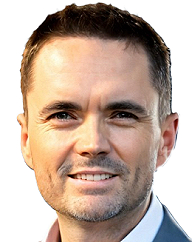 |
Townsquare Media Chief Growth Officer Kelly Quinn will depart the company on October 30, ending a 25-year career that included senior leadership positions in sales, market operations, digital advertising and revenue development.
Quinn announced his departure in a September LinkedIn post, saying the timing was right to close this chapter of his career. He has not announced his next professional move and plans to take some time away before considering future opportunities.
"It feels surreal to even be typing this, but the timing is right to close this chapter," Quinn wrote. "During my time at Townsquare, I've had the opportunity to wear a lot of hats."
Quinn began his career as a sales representative before advancing into market leadership and becoming Townsquare's first Corporate Vice President of Sales. He subsequently helped lead the company's digital advertising operations and served as Chief Revenue Officer before assuming the Chief Growth Officer position.
In February 2025, Quinn was promoted from Regional Vice President to Chief Revenue Officer of Ignite, Townsquare's in-house programmatic digital advertising division. In that role, he was responsible for expanding Ignite's business and leveraging its data-driven advertising solutions to strengthen client relationships.
At the time, Ignite President Todd Lawley praised Quinn's leadership abilities, saying his experience motivating sales teams positioned him to drive continued growth for the division.
Reflecting on his tenure, Quinn highlighted Townsquare's transformation from a traditional broadcasting company into a digital-first media organization, noting that digital now accounts for nearly 60% of the company's revenue.
"There was no owner's manual for that. We had to build it. We had to innovate," Quinn wrote. "And to my colleagues reading this, know that you did that. I'm deeply grateful that I got to play a role in it."
Quinn also credited several executives and colleagues who influenced his career, including Erik Hellum, Todd Lawley, Bill Wilson, Bob McCuin, Zoe Burdine-Fly and the late Bob Freeman.
He said the relationships developed throughout his career were among his most rewarding experiences, particularly while working with teams across dozens of Townsquare markets.
"For now, I'm going to take some time away and think about what I want the next chapter to look like," Quinn wrote. "Whatever comes next, I know I'll continue to be drawn to the things I've always loved most: building businesses, developing people, solving problems and helping teams accomplish things they didn't think were possible."
Quinn added that he will continue supporting Townsquare's success following his departure.
The company has not announced a successor or disclosed how Quinn's responsibilities will be reassigned.
Eastlan Ratings Adds Kelly and Ehrman to Support Team
| RADIO ONLINE | Tuesday, October 27, 2026 | 2:06pm CT |
|
 |
Eastlan Ratings has expanded its client training and support team with the addition of radio industry veterans Jay Kelly and Tommy Ehrman as the company prepares for continued market expansion into 2027.
Kelly brings decades of broadcast and digital media experience to Eastlan. A nationally recognized consultant, he previously worked as a major-market radio drive-time personality and Program Director in Seattle, Minneapolis, Salt Lake City and Kansas City.
His experience with Wet Fish Digital will also support Eastlan's efforts to help radio sales teams develop strategies for selling digital services and competing in an increasingly diverse media marketplace.
Ehrman brings extensive experience in small- and medium-market radio operations and sales. He began his broadcasting career as a part-time janitor at a radio station in Modesto, CA, before advancing through various positions in the industry. His background includes an 18-year tenure with Citadel, primarily in sales and sales management, along with expertise in developing effective radio advertising schedules.
"Life is too short for a phone tree to nowhere or time-sucking chatbots. When our clients need assistance, they need it now," said Eastlan President Mike Gould. "We are resolute in our commitment to provide our clients the support they deserve: real humans who listen and respond quickly."
Gould also criticized the reliance on automated customer service systems and offshore support operations used by other ratings providers, emphasizing Eastlan's commitment to direct, personalized assistance for its clients.
The appointments come as Eastlan continues expanding its audience measurement services into additional radio markets. The company said it expects to announce several more staff additions and numerous new markets in the coming weeks.
Advertisement
|
Chris Cline Exits Reelworld as VP/AR After 18 Years
| RADIO ONLINE | Tuesday, October 27, 2026 | 10:49am CT |
|
 |
Chris Cline has departed his position as Vice President of Affiliate Relations at Reelworld after 18 years with the radio imaging and production company. He will continue working with Reelworld in a limited consulting capacity.
Cline, a radio industry veteran with more than three decades of experience, described his departure as the beginning of a new chapter in his career.
"I have nothing but great things to say about my tenure at Reelworld," said Cline. "I'm incredibly grateful for the people I've had the opportunity to work with over the years and will always consider everyone at Reelworld my friends and family."
Throughout his career, Cline has held positions spanning affiliate relations, syndication, sales, marketing, creative services and radio production.
Before joining Reelworld, he co-founded N2 Effect, a company specializing in radio jingles and imaging. He also spent six and a half years with TM Century, now known as TM Studios, where he served as Director of Sales and Marketing and Director of Creative.
Cline began his broadcasting career as an intern at WBBM-FM (B96) in Chicago. He subsequently worked at several radio stations throughout the Midwest before transitioning into syndication and radio production.
His departure concludes nearly two decades in a senior affiliate relations role at Reelworld, although his continued consulting arrangement will maintain a connection with the company.
iHeartMedia Sets Third Quarter Earnings Call for Nov. 9
| RADIO ONLINE | Tuesday, October 27, 2026 | 5:02pm CT |
|
 |
iHeartMedia has announced that it will release its financial results for the third quarter ended September 30 on Monday, November 9. The company will host a conference call at 4:30pm ET following the earnings release to discuss its quarterly financial performance and business outlook.
Investors and analysts can listen to the live audio webcast through the company's investor relations website at investors.iheartmedia.com.
The conference call will also be accessible by telephone at (833) 461-5787 for domestic callers or 1 (585) 542-9983 for international participants, using Meeting ID 653 924 567. Participants are encouraged to connect at least five minutes before the call begins.
An audio replay will be available beginning at 7:30pm ET on November 9 through the Events & Presentations section of iHeartMedia's investor relations website.
The replay can also be accessed by calling (833) 309-1852 domestically or 1 (929) 828-5978 internationally, using the same meeting ID. It will remain available for 30 days.
The earnings release and related financial materials will be posted on the company's investor relations website.
Fisher House Offers Free Veterans Day Radio Special
| RADIO ONLINE | Tuesday, October 27, 2026 | 11:01am CT |
|
 |
Fisher House Foundation is offering radio outlets nationwide a free three-hour Veterans Day special, "Together in Mission: The Fisher House Journey," hosted by nationally syndicated radio personality and Townhall Editor Larry O'Connor.
The program, available for broadcast on Veterans Day, Wednesday, November 11, and throughout the holiday period, features interviews with wounded service members, veterans and military families who have received assistance from Fisher House Foundation. The nonprofit provides free lodging for military and veteran families while their loved ones undergo medical treatment.
Designed primarily for News/Talk stations, the special is also available in shorter versions suitable for other formats. Participating stations can carry the program without cash or barter requirements.
Among the featured interviews is Army veteran Jonathan Turnbull, who was severely wounded and blinded in a January 2019 ISIS suicide bombing in Syria that killed four Americans. Turnbull and his wife, Samantha, discuss his recovery, the support they received from Fisher House and his subsequent participation in the Department of Defense Warrior Games.
The program also features Sven Jacobs, whose wife, Air Force service member Sierra Jacobs, suffered a massive stroke while pregnant with their second child. Jacobs recounts the family's medical evacuation and recovery experience, including assistance from Fisher Houses in Germany and Texas.
Other guests include Jalyn Rowe, whose Navy veteran grandson battled a rare neurological disorder; Coast Guard veteran William Hamilton III, who suffered a stroke while stationed in Alaska; and Navy veteran Mike Bobinchuck, who underwent a heart transplant.
Fisher House Foundation Chairman Ken Fisher and President Dave Coker also appear in the special, discussing the organization's history, expansion and additional programs supporting military families.
Among those initiatives is Hero Miles, which uses donated airline miles to help transport family members to the bedside of hospitalized service members and veterans. The foundation also supports adaptive sports programs and other services for military families.
O'Connor, who hosts the nationally syndicated "O'Connor & Company" morning program on Salem Radio Network, guides listeners through the personal accounts of military service, medical emergencies and recovery.
"Together in Mission: The Fisher House Journey" is being distributed at no charge to participating stations, with no cash or barter obligations.
Stations can hear a demonstration and register to receive the program here.
Westwood One Study Challenges Eight AM/FM Radio Myths
| RADIO ONLINE | Monday, October 26, 2026 | 2:16pm CT |
|
 |
A new analysis from Cumulus Media's Westwood One Audio Active Group challenges eight common advertiser perceptions about AM/FM radio, citing research that shows the medium continues to deliver substantial audience reach, advertising effectiveness and return on investment.
In the latest Audio Active Group blog, Chief Insights Officer Pierre Bouvard examines findings from Nielsen, Edison Research, LeadsRx and an August 2026 Advertiser Perceptions survey of 302 media agency and advertising professionals. The analysis identifies significant differences between how advertisers perceive radio audiences and actual listening behavior.
According to the Advertiser Perceptions survey, agencies and marketers estimated that AM/FM radio reaches just 43% of Americans weekly. However, Nielsen data places the medium's weekly reach at 86%, twice the industry estimate.
The report also challenges the perception that younger audiences have abandoned traditional radio. Nielsen data provided through Katz Radio Group indicates that adults 18-34 represent AM/FM radio's largest listening demographic, with more than 63 million weekly listeners.
Another misconception involves radio's audience share compared with streaming services. Advertisers estimated that Spotify and Pandora command a combined 46% share of ad-supported audio listening, compared with 26% for AM/FM radio. However, Edison's Q3 2026 "Share of Ear" study places AM/FM radio's actual share at 62%, approximately 13 times that of ad-supported Spotify and 16 times that of ad-supported Pandora.
In-car listening remains another area of strength. According to Edison Research, AM/FM radio accounts for 81% of ad-supported audio listening in vehicles, despite growing availability of connected-car entertainment options.
The analysis also examines radio's potential contribution to advertising campaigns. Nielsen Media Impact research cited by the Radio Advertising Bureau found that reallocating just 10% of a media budget from connected television, digital and linear television to AM/FM radio increased campaign reach by 20% without increasing overall spending.
Daily audience reach provides another distinction. Edison's research indicates that ad-supported Spotify, Pandora and podcasts collectively reach 32% of Americans on a typical day, compared with 56% for AM/FM radio.
Bouvard also addresses advertiser skepticism about radio's return on investment. Nielsen's Global Media Mix Modeling Benchmarks rank AM/FM radio second globally in advertising ROI, generating an average return of $2 for every dollar invested. In the U.S., radio ranks fourth among 12 measured media categories, delivering $2.14 for every advertising dollar.
Additional attribution research conducted by LeadsRx for Westwood One found that AM/FM radio advertising generated an average 14% increase in website traffic across 17 campaigns measured over five years.
The report concludes by challenging the perception that radio advertising cannot be measured as effectively as television or digital media. Westwood One maintains that modern attribution and measurement tools can evaluate radio's contribution to website visits, sales and other advertising outcomes.
The findings underscore the gap between advertiser assumptions and audience measurement data, with Bouvard arguing that radio remains an important component of advertising strategies seeking broader reach and measurable results.
Read the complete Cumulus Media | Westwood One Audio Active Group blog here.
SummitMedia Names Aaron Wilborn Omaha Market President
| RADIO ONLINE | Monday, October 26, 2026 | 2:09pm CT |
|
 |
SummitMedia has appointed Aaron Wilborn as Market President of its Omaha operations, overseeing the company's radio stations, digital platforms and events business. Wilborn joins SummitMedia from Dick Broadcasting Company, where he has served as President since 2018, directing the company's radio group along with its digital and events divisions.
A broadcast executive with more than 25 years of experience in radio and digital sales, Wilborn previously served as President and CEO of Apex Media Corporation in Charleston, SC, where he oversaw radio, digital, outdoor advertising and information technology operations.
Earlier in his career, he held senior sales and market leadership positions with Clear Channel/iHeartMedia in Jacksonville, FL, West Palm Beach/Treasure Coast, FL, and Washington, DC.
"I'm incredibly excited to join SummitMedia," said Wilborn. "Omaha is an outstanding market, and I look forward to working alongside our talented team to strengthen our advertiser relationships and make a lasting impact in the community."
SummitMedia Executive Vice President Randy Chase welcomed Wilborn, citing his leadership experience and the company's growth opportunities in Omaha. "Aaron brings discipline, focus and energy to the Omaha market," said Chase. "With Omaha growing at an accelerated pace, we see tremendous potential for our stations, our advertisers and our team."
SummitMedia's Omaha cluster includes KQCH-FM (Channel 94.1), KSRZ-FM (Star 104.5), KEZO-FM (Z92), home of the syndicated "Todd N Tyler Radio Empire," and KKCD-FM (Classic Rock 105.9).
Advertisement
|
WUSW Launches US Country Format in Buffalo
| RADIO ONLINE | Monday, October 26, 2026 | 12:21pm CT |
|
 |
Buddy Shula's Radio One Buffalo has launched US Country on WUSW in Buffalo, NY, introducing a Classic Country format featuring hits from the 1980s, 1990s and early 2000s. The station targets listeners throughout Western New York and Southern Ontario.
Branded as "US Country - Buffalo's Country Favorites," the station features a "Retro Hot Country" playlist highlighting artists including Garth Brooks, George Strait, Alan Jackson, Kenny Chesney, Shania Twain, Brooks & Dunn, Reba McEntire and Dolly Parton.
The station's on-air lineup includes veteran Buffalo Country personalities Buddy Shula, Wendy Lynn, Greg Ireland and Aaron James. Liz Mantel is scheduled to join the morning lineup in December.
"US Country is built around a clear promise: great country music and a station that feels connected to the people who listen," said Radio One Buffalo owner Buddy Shula. "We're bringing Buffalo country artists and songs that they have been craving, and that you can't find anywhere else on the radio, locally."
Shula, who previously worked at Buffalo's heritage Country station WYRK, said the new format is designed to fill a gap in the market by featuring familiar artists and songs that receive limited exposure on contemporary Country radio. "In Buffalo, WYRK is the heritage country station. I was on the air at WYRK earlier in my career, and it's where I found my love for country music," Shula said. "However, the artists and songs we were playing back then cannot be heard anymore... until now."
Veteran Country programmer Ken Johnson has also joined US Country as a special advisor. Johnson served as WYRK's first Program Director from 1982 to 1997 before moving to Country WXTU in Philadelphia. He subsequently worked as a Program Director and consultant for multiple Country music channels at XM Satellite Radio from 2001 to 2009.
The launch positions WUSW as an alternative to Buffalo's existing Country offerings, emphasizing established hits and familiar personalities from the format's earlier decades.
Country Radio Hall of Fame Nominations Due October 30
| RADIO ONLINE | Monday, October 26, 2026 | 5:05pm CT |
|
 |
The Country Radio Hall of Fame (CRHoF) is reminding industry professionals that nominations for its Class of 2027 must be submitted by Friday, October 30, to receive consideration for next year's induction.
Established in 1974, the Country Radio Hall of Fame recognizes individuals who have made significant contributions to the country radio and music industries. Eligible nominees must have worked in radio for at least 20 years, including a minimum of 15 years in the Country format.
The Hall of Fame recognizes professionals in two categories: Radio, honoring those who have worked behind the scenes in programming, management, sales and other industry positions; and On-Air Personality, recognizing broadcasters who have made significant contributions through their on-air work.
Nominations are accepted throughout the year, but submissions received after the October 30 deadline will be considered for the Class of 2028 rather than 2027.
The Class of 2027 inductees will be announced during Country Radio Seminar (CRS) 2027, scheduled for March 17-19 at the Omni Nashville Hotel in Nashville.
Industry professionals wishing to nominate a candidate can complete the official nomination form here.
WFUV New York Promotes Rich McLaughlin to GM
| RADIO ONLINE | Friday, October 23, 2026 | 1:21pm CT |
|
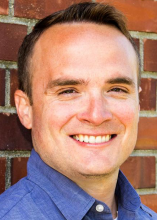 |
Fordham University's AAA WFUV-FM (90.7) New York has promoted Program Director Rich McLaughlin to General Manager. McLaughlin has served as interim GM since July 2026. A Fordham University graduate, McLaughlin began his broadcasting career at WFUV as a student before moving into satellite radio in 2001 as Format Manager for the then-new Sirius Satellite Radio, where he programmed the Alt Nation and Left of Center channels.
He returned to WFUV as Content Director in 2008 before joining Clear Channel New York as Digital Program Director in 2009. His subsequent positions included Senior Director of Digital Programming at Merlin Media and Director of Digital Programming and Senior Vice President of Programming for iHeartRadio.
McLaughlin later served as Senior Music Curator and Global Programming Lead for Amazon Music before returning to WFUV as Program Director in June 2021.
"WFUV has been a cornerstone of my life since my college days, and I know firsthand how transformative this station is for students discovering their potential," said McLaughlin.
"We have an incredible team, a passionately loyal community of listeners, and a vibrant connection to New York's cultural fabric. I am honored to lead WFUV as we continue championing music discovery, mentoring our students, and finding creative new ways to serve our community."
In his new role, McLaughlin will oversee the station's operations, programming and continued development as a public radio outlet serving the New York metropolitan area.
UNT Names Zac Babb Operations Manager for KNTU
| RADIO ONLINE | Friday, October 23, 2026 | 4:36pm CT |
|
 |
The University of North Texas (UNT) has named Zac Babb Operations Manager for its three audio brands, including KNTU-FM (88.1), its Indie/Alternative-AAA station, Jazz-formatted KNTU-HD2 (The One) and student-operated MeanGreenHits.com.
Babb, a 2017 UNT graduate and former KNTU student, returns to the station after previously serving as Sports and Events Manager from September 2022 through January 2025.
He also maintains an extensive relationship with North Texas Athletics, serving as the radio play-by-play voice for the university's women's basketball team. Additionally, he works as sideline reporter, engineer and producer for North Texas football broadcasts.
"UNT has been an important part of both my personal and professional journey for more than 10 years now, and I'm very grateful to be given the opportunity to rejoin my alma mater's radio station," said Babb.
"KNTU has a tremendous history of developing talent, and I'm excited to build on that tradition and legacy while helping provide students with the tools and experience they need to succeed in the industry."
KNTU General Manager Todd Pitts, known professionally as Todd Shannon, welcomed Babb's return, citing his experience and commitment to student development.
"Having worked with Zac in the past, I know his heart for broadcasting, coaching students and without a doubt he bleeds Mean Green," said Pitts. "We are now well poised to serve our ever-growing base of students who have a genuine interest in our medium."
In his new position, Babb will oversee operations across UNT's three audio platforms while supporting the university's efforts to provide students with hands-on broadcasting experience.
Advertisement
|
Edison Reveals Top 50 U.S. Podcasts for Q3 2026
| RADIO ONLINE | Friday, October 23, 2026 | 12:49pm CT |
|
 |
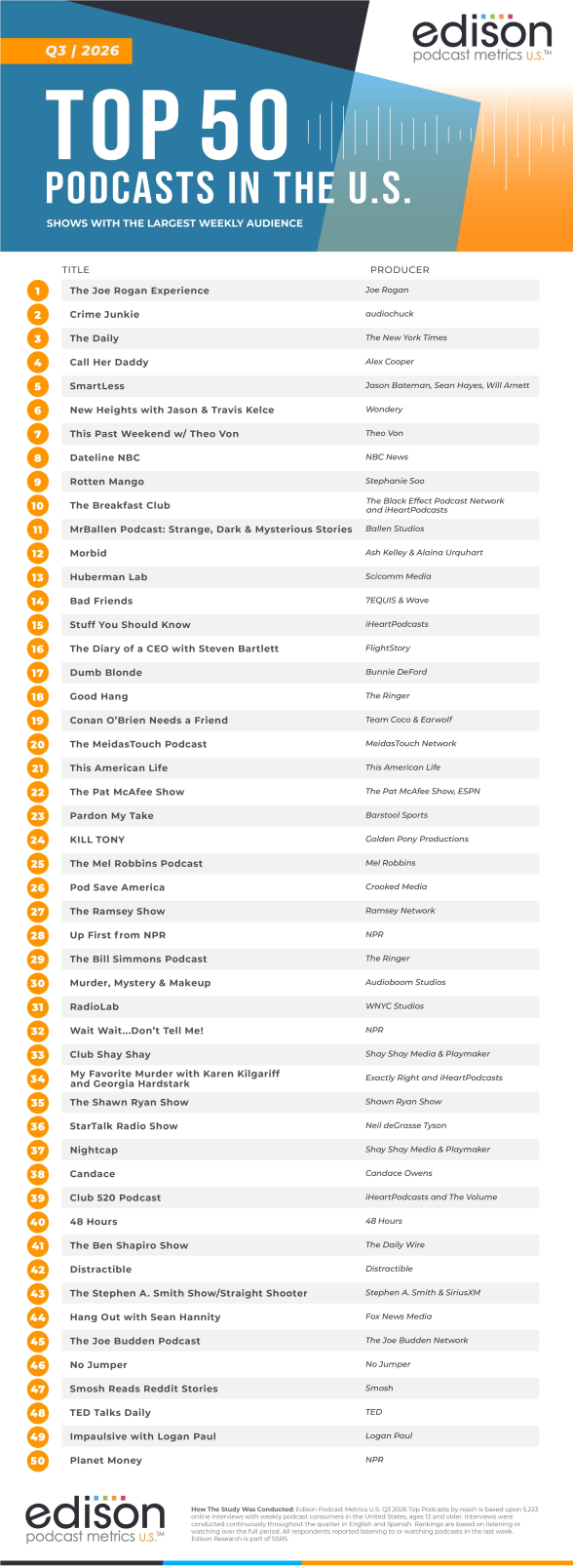
Edison Research at SSRS has released its Top 50 Podcasts in the U.S. for the third quarter of 2026, with "The Joe Rogan Experience," "Crime Junkie" and "The Daily" retaining the top three positions for the second consecutive quarter.
The rankings, based on reach among weekly podcast consumers ages 13 and older, are compiled through Edison Podcast Metrics.
"Call Her Daddy" ranked fourth, followed by "SmartLess" in fifth. "New Heights with Jason & Travis Kelce" climbed one position to sixth, while "This Past Weekend w/ Theo Von" also gained one spot to seventh.
"Dateline NBC" slipped two positions to eighth, while "Rotten Mango" posted the largest gain among the top 10, climbing four places to ninth. "The Breakfast Club" rounded out the top 10, moving up one position.
Among the quarter's notable developments, "Dumb Blonde," hosted by Bunnie Xo, entered the top 20 for the first time. The program attracted attention in August following the posting and subsequent removal of an episode discussing her divorce from country music artist Jelly Roll.
Three additional programs moved into the top 25: "The Pat McAfee Show," "Pardon My Take" and "Kill Tony." The gains came amid increased visibility for the shows, including the release of a country-rock album by McAfee, a 10th-anniversary book from the creators of "Pardon My Take" and live performances by "Kill Tony" at Madison Square Garden.
Five podcasts made their first appearances in the top 50: "StarTalk Radio," "Club 520," "The Stephen A. Smith Show/Straight Shooter," "Hang Out with Sean Hannity" and "Smosh Reads Reddit Stories."
Meanwhile, "True Crime with Kendall Rae" recorded one of the quarter's largest improvements, jumping 44 positions to No. 55, just outside the top 50.
Edison Podcast Metrics measures podcast listening behavior and ranks programs by audience reach rather than download totals, providing a view of the most widely consumed podcasts among U.S. weekly listeners.
MIW Names Callie Luttman 2026 Behind the Mic Mentee
| RADIO ONLINE | Monday, October 26, 2026 | 0:01am CT |
|
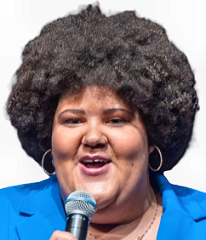 |
Mentoring and Inspiring Women in Radio (MIW) has named Callie Luttman, morning host of Saga Communications' WLRW-FM (Mix 94.5) in Champaign-Urbana, IL, as the recipient of its 2026 Behind the Mic Mentorship.
The year-long program provides professional development opportunities for women in on-air broadcasting through one-on-one mentorship with senior industry executives. The initiative focuses on programming, talent development, audience growth and brand strategy. As part of the program, Luttman will also attend the 2027 NAB Show in Las Vegas.
Luttman currently hosts mornings on Mix 94.5, having previously spent four years co-hosting "The Tommy and Callie Morning Show." She also handles afternoon drive on 97.9 The Vibe, where she oversees music programming.
Additionally, Luttman hosts "Focus," a weekly public affairs program airing across all seven Illini Media Group stations. The program addresses community issues including domestic violence prevention, food and hygiene insecurity, and resources for veterans and first responders.
Her broadcasting career began at WEIU Hit Mix 88.9 and Cromwell Radio Group. Beyond her on-air duties, she remains active in event planning, community outreach and local initiatives throughout the Champaign-Urbana area.
"Callie represents the kind of talent this mentorship was created to support," said MIW Board Member Leslie Scott. "She's already demonstrated tremendous initiative by taking on multiple on-air roles, programming responsibilities and meaningful community engagement."
Scott added that Luttman's commitment to professional growth and connecting with listeners made her an ideal candidate for the mentorship. "I am beyond grateful to have been selected for this incredible opportunity," said Luttman. "I'm motivated and ready to explore new areas of growth while learning from some incredible women in this industry. I truly appreciate this opportunity and can't wait to get started!"
The Behind the Mic Mentorship is part of MIW's ongoing efforts to develop and advance women in radio broadcasting through professional guidance, industry connections and leadership development.
Recharge Media Brings KGSR Calls Back to Texas
| RADIO ONLINE | Friday, October 23, 2026 | 1:11pm CT |
|
 |
Recharge Media PBC has secured the historic KGSR-FM call letters through the FCC's call sign availability system, replacing KCRQ-FM in Junction, TX, as the company prepares to expand its CRUSH FM Adult Contemporary format across the Texas Hill Country.
Recharge Media holds a construction permit to relocate the station from Junction to Cherry Spring, TX, approximately 75 miles west of Austin. Upon completion of the move, anticipated during the first quarter of 2027, the station will launch as CRUSH 103.3 FM, expanding the format's coverage throughout the region.
CRUSH FM features an Adult Contemporary format celebrating the music, people and lifestyle of the Texas Wine Country. The programming is currently available on KMSN 104.1 FM in Mason, 101.3 FM in Fredericksburg, the Sun Radio app and online at Crushstream.com.
The network's studios are located at the new Grand Central Great Lawn in Fredericksburg, overlooking the venue's live music stage.
In addition to CRUSH FM, Recharge Media owns KJFK-AM 1490 HD in Austin, KJFK-FM 96.3 (Jack FM), serving Llano and Austin, and KGID-FM 96.3, licensed to Giddings, TX.
The KGSR-FM call letters have a long history in Central Texas radio, dating back to the 1980s when they were assigned to stations serving the Austin area. Their return marks another chapter for the familiar call sign as Recharge Media prepares to introduce CRUSH 103.3 FM to a broader Hill Country audience.
NYSBA Announces 2026 Rising Leaders Fellowship Graduates
| RADIO ONLINE | Friday, October 23, 2026 | 3:35pm CT |
|
 |
The New York State Broadcasters Association (NYSBA) has announced the graduation of eight broadcast professionals from its 2026 Rising Leaders Fellowship, a leadership development program designed to prepare emerging executives for expanded responsibilities in radio and television.
The MBA-style fellowship focuses on the business and operational skills required of today's broadcast leaders, combining personal leadership development with training in revenue generation, news and content management, broadcast accounting, strategic planning and community engagement.
The 2026 Rising Leaders Fellowship graduates are:
- Danielle Ashworth, Sales Manager, Regional Radio Group
- Candace Curby, Promotions Director and On-Air Personality, Albany Broadcasting
- Josh Koumjian, News Director, WNYT and WNYA
- Kathleen O'Hare-Stewart, Controller, WHEC-TV
- Rob Taylor, News Director, NewsChannel 9 WSYR
- Brielle Travis, Account Executive, Pamal Broadcasting
- Veronica Volk, Executive Producer/Director of Podcast Strategy, WXXI
- Natasha Yurek, Senior Executive Producer, Nexstar/WIVB-TV
"The future of local broadcasting depends on leaders who understand both our evolving business and the responsibilities of serving our local communities," said NYSBA President and Executive Director Heidi Raphael. "This year's graduates represent the talent, dedication and potential that will move our industry forward."
Raphael added that investing in the development of emerging leaders strengthens New York's radio and television stations and their commitment to local communities.
Marc Jaromin, President of Roundtable Media, NYSBA Board member and Fellowship Program Dean, emphasized that the program is designed to develop leadership capabilities beyond participants' current positions.
"Our goal is not simply to help talented people take the next step in their careers. Our goal is to help build leaders who make the people and organizations around them better," said Jaromin.
He noted that the fellowship encourages participants to recognize their personal strengths, develop a broader understanding of broadcast operations and appreciate the connection between station success and community service.
NAB Show New York Draws 6,700 Attendees
| RADIO ONLINE | Friday, October 23, 2026 | 4:30pm CT |
|
 |
NAB Show New York 2026 concluded Thursday at the Javits Center, recording more than 9,000 registrations, with approximately 6,700 people actually attending the two-day event. The conference focused on artificial intelligence, streaming, live sports and emerging media technologies.
According to preliminary figures released by the National Association of Broadcasters (NAB), 57% of attendees were first-time participants. Representatives from 72 countries attended, while approximately 250 exhibiting companies and sponsors showcased products and services. The conference featured 101 educational sessions and 156 speakers.
"From new business models to next-gen tools, industry leaders shared how they're using emerging technology to move their businesses forward," said NAB Executive Vice President of Global Connections and Events Karen Chupka. "That's part of the value of bringing the people into the same room who finance content, produce it and develop the technology."
Artificial intelligence's impact on production costs, changing content distribution models and the growing importance of live sports were among the major topics discussed throughout the event.
During a session titled "Game On: The Power of Sports on Broadcast," sports commentator Clay Travis encouraged broadcasters to experiment with new approaches to audience development rather than expecting immediate results.
"I think you have to be experimental. I'm a data guy, but I'll try a lot of things," Travis told NAB President and CEO Curtis LeGeyt. "Scale comes with time, but it also comes with experiment."
LeGeyt emphasized the importance of sports programming to local broadcasters, noting that major sports rights help support the financing of local news and community programming.
New York Islanders co-owner Jon Ledecky also participated in discussions about attracting new audiences to professional sports, including efforts to increase interest in individual NHL players.
Looking ahead, NAB announced that NAB Show New York and the Society of Motion Picture and Television Engineers (SMPTE) Summit will co-locate at the Javits Center in 2027.
The SMPTE Summit will take place September 28-30, featuring three days of technical sessions addressing emerging technologies, industry standards and production workflows. NAB Show New York will return September 29-30.
"We're excited to bring the SMPTE Summit back to New York alongside NAB Show," said SMPTE Executive Director Sally-Ann D'Amato. "This is a natural fit for our organizations and a tremendous opportunity for the industry."
Meanwhile, the 2027 NAB Show in Las Vegas is scheduled for April 3-7, with exhibits open April 4-7.
Advertisement
|
Advertisement
|
Advertisement
|
Advertisement
|
Advertisement
|
Advertisement
|
|
Copyright © 1989-2026 RADIO ONLINE ® |

